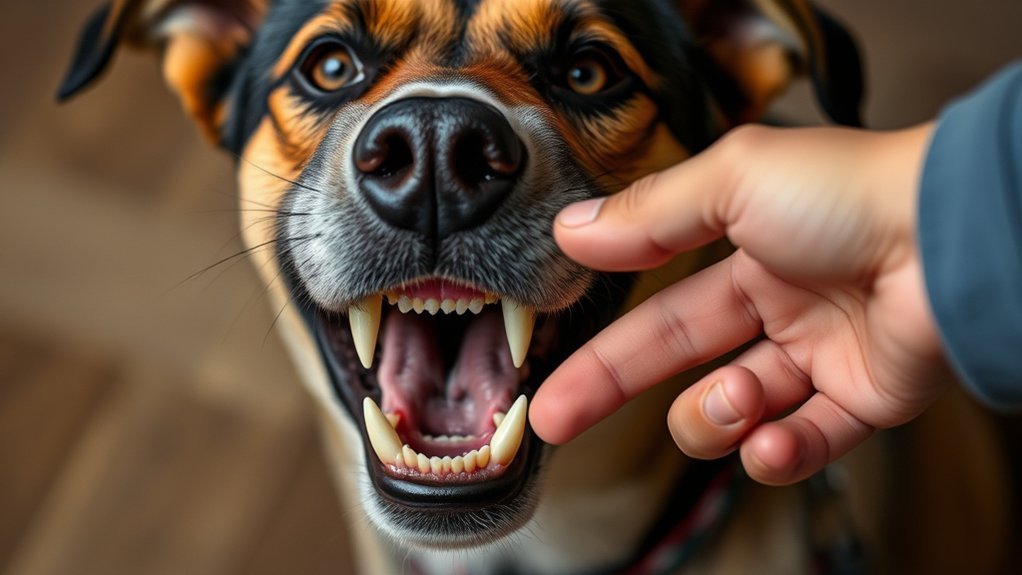
5 Red Flags Your Dog Might Bite
It's important to understand your dog's behavior to help prevent bites. Dogs often show signs of fear, anxiety, or aggression that we might not notice right away. Look for clues like a stiff body, pinned ears, or growling. These signs mean your dog is feeling upset. If you see them, try to help your dog feel better. Being aware of these cues can make your home safer for both of you.
Also, pay attention to other important signals that can tell you how your dog is feeling. Understanding these signs helps you communicate better with your dog and keeps everyone safe. Remember, dogs want to be happy, just like we do!
Key Takeaways
5 Signs Your Dog Might Bite
- If your dog is cowering, licking its lips, or avoiding eye contact, it may feel anxious. This anxiety can lead to biting if you don't help your dog feel safe.
- Watch for stiff posture, pinned ears, or low growling. These signs mean your dog might be ready to be aggressive. Pay attention and don't ignore these signals.
- If your dog barks a lot or stares for a long time, it could be overstimulated or frustrated. This situation may increase the chance of a bite.
- Growling or snapping can mean your dog is protecting something, like food or toys. This behavior is called resource guarding, and it can be a risk for bites.
- If your dog whines or shows pain when you touch it, this could lead to biting. Make sure to manage any discomfort your dog feels.
Understanding these signs will help you keep both your dog and others safe. Always be observant and mindful of your furry friend's feelings!
Warning Signs of Fear and Anxiety
When a dog feels scared or anxious, it shows this through its body language. It's important to notice these signs so you can help your furry friend feel safe.
Look for signs like cowering, licking their lips, or avoiding your gaze. These can mean your dog is anxious about something around them. You might see their tail tucked under their body and their ears pinned back. These are strong signs that your dog is feeling stressed.
These body signals help your dog communicate how they feel. By paying attention to these signs, you can better support your dog and help reduce their anxiety.
When you notice their fear, you can create a comforting space for them. This will strengthen your bond and make sure your pet feels safe and loved.
Aggressive Body Language
Understanding your dog's body language is important for their safety and yours. It's key to notice when your dog might feel scared or anxious, but it's also crucial to watch for signs of aggression that could lead to biting.
Look at your dog's posture. If they're standing stiff and tense, they may be ready to react. Pay attention to their ears. If they're pinned back or held high and your dog is giving a low growl, something might be wrong.
If you see your dog showing teeth or staring at something, that's also a big warning sign. Catching these signals early can help you avoid a situation where your dog becomes aggressive.
Overstimulation or Frustration
Overstimulation or frustration can make your dog feel very excited or even aggressive. When you play with your dog, keep an eye out for signs that they're getting too worked up. If your dog starts to bark a lot, seems overly excited, or stares at something for too long, it's a good idea to take a break and give them some space.
Things like sudden movements from kids or other pets can make your dog feel stressed. This stress can lead to snapping or biting. By paying attention to these signs and making changes in your environment, you help keep everyone safe—both you and your dog.
When you understand your dog's needs and respond to their feelings, they'll feel more secure. This not only helps build a stronger bond between you, but it also reduces the chances of any aggressive incidents.
Keep enjoying your time together while also being aware of their emotions!
Protectiveness Over Resources
Dogs can sometimes act upset when they feel their food, toys, or personal space are in danger. This is called resource guarding.
When a dog protects its stuff, it might growl, snap, or stand in a certain way to warn others. This behavior often comes from a need to guard what it sees as important, which can happen if the dog has faced tough times before.
If your dog shows signs of resource guarding, it's important to handle it with care.
Instead of punishing your dog, use patience and training methods. Help your dog feel more relaxed by getting it used to people being near its favorite things. You can make this a positive experience, which will help your dog feel safer and less likely to act aggressively.
Understanding these behaviors is key to keeping both you and your dog safe.
Pain or Discomfort Indications
If your dog is hurting, you might see some big changes in how it acts. Your dog could become more aggressive or even bite.
Look for signs of pain, like whining, growling, or snapping when you touch certain spots.
If your dog is uncomfortable, it might hide, not want to move, or lick the same spot too much. It's important to notice these signs. They show that your dog might feel scared or hurt.
Instead of ignoring this behavior, think of it as a call for help. If you see these signs, take your dog to the vet to find out what's wrong.
Keeping your dog comfortable can help build trust between you. This way, you both can enjoy a happier relationship together.
Frequently Asked Questions
How Can I Prevent My Dog From Biting?
To stop your dog from biting, use positive reinforcement and socialization. Reward your dog when they behave well. Take them to new places and let them meet different people and dogs. This helps them feel safe and builds their confidence. With time, you will create a friendly and happy environment for both of you. Remember to be patient and make it fun!
What Should I Do if My Dog Bites Someone?
If your dog bites someone, keep calm. Check if everyone is safe. If someone is hurt, help them get first aid. Think about how to prevent bites in the future. Make a plan for what to do if it happens again. You are not alone in this. Many people face similar situations.
Are Certain Breeds More Prone to Biting?
Some dog breeds can be more scared than others. This fear can make them act out, which might lead to biting. Knowing how different breeds behave can help you create a safe and happy space for them. It's important to understand your dog's unique traits. This way, you can have better, happier times together.
Can Training Reduce a Dog's Biting Tendency?
Yes, training can help reduce a dog's biting. Using positive reinforcement lets the dog know what is good behavior. This builds trust between you and your dog. When your dog feels safe and understood, they learn to act in better ways.
What Are the Signs My Dog Feels Safe?
How Can You Tell if Your Dog Feels Safe?
If you want to know if your dog feels safe, watch their body language. Here are some signs to look for:
- Relaxed Posture: A happy dog stands or lies down without tension. They look comfortable and at ease.
- Wagging Tail: When a dog's tail wags, it often means they feel good. A loose, wagging tail shows they are friendly and relaxed.
- Playful Behavior: If your dog likes to play, it's a great sign they feel secure. They might bring you toys or run around happily.
Creating a safe space for your dog helps them feel even more secure. Make their environment cozy and calm. With love and care, you can help your furry friend feel at home!