Everything You Need to Know About the Great Dane
If you're thinking about getting a Great Dane, get ready for a unique adventure. These big dogs are known as gentle giants. They were once noble hunting dogs, and have a history that is pretty cool. Their size grabs attention, but there is much more to them.
Great Danes have special physical traits. They are tall and strong, with a friendly look that makes you smile. Their size might seem scary to some, but they are usually kind and loving.
These dogs are known for having great personalities. They are loyal and get along well with families. They love spending time with people and can be very playful.
If you add a Great Dane to your home, you will find a big friend who fills your life with joy. You might see that this dog is just the right fit for you!
Key Takeaways
Great Danes are really big dogs. They can stand between 28 and 34 inches tall. They come in many different coat colors too!
These dogs are friendly and loving. They make great family pets and can even protect your home.
Great Danes need some special care. They should eat a balanced diet and visit the vet regularly to check their joints and overall health.
Training and socializing them early is important. Start with simple commands and keep practicing to help them behave well.
It's also important for them to have enough space to move around. Daily walks and fun activities keep a Great Dane happy and healthy.
History of the Great Dane
The Great Dane has a rich history that goes back thousands of years.
These dogs were first bred for hunting and guarding. They likely come from the mastiffs of ancient Egypt and were developed further in Germany, where they became symbols of nobility.
Over time, their role changed. They went from fierce protectors to loving family pets. This history not only shows their impressive background but also connects you to many people who love this breed.
The Great Dane is more than just a pet; it represents a proud legacy.
If you're interested in these gentle giants, you'll find a community that shares your love for them.
Great Danes are known for their friendly nature and playful spirit, making them wonderful companions for families.
Physical Characteristics
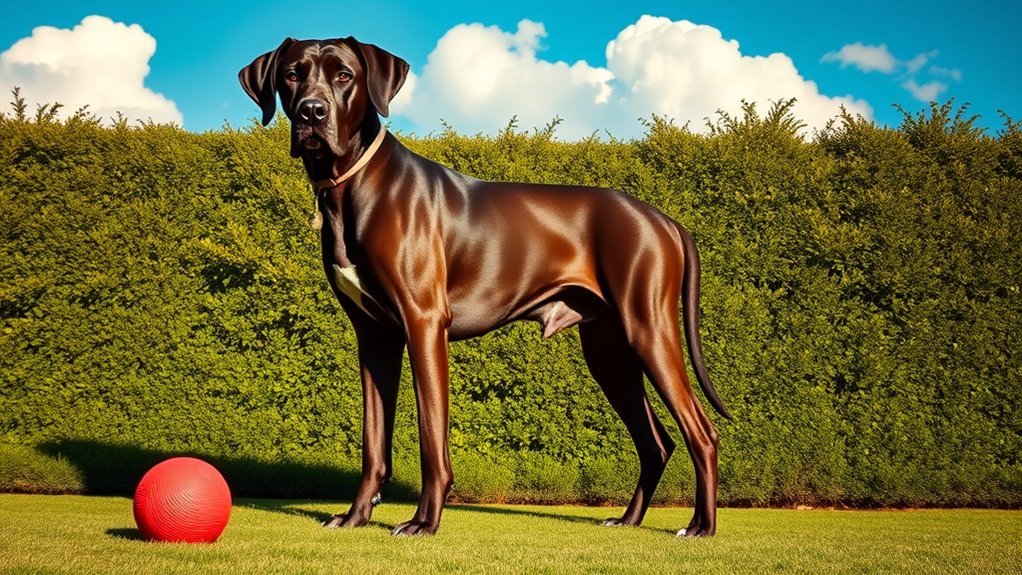
The Great Dane is a big dog that many people recognize right away. They stand about 28 to 34 inches tall at the shoulder, making them one of the tallest dog breeds.
When you meet a Great Dane, you'll notice their special coat colors. Here are some common ones:
- Fawn – This color looks like golden yellow with a black face.
- Merle – This mix has beautiful gray and black patches.
- Brindle – This coat combines fawn with dark stripes.
These colors make each Great Dane unique and special. With their impressive size and beautiful looks, Great Danes catch everyone's attention. They also create a sense of joy among dog lovers.
Temperament and Personality
Great Danes are big dogs with a lovable personality. They're very friendly and enjoy being around people.
These gentle giants love to cuddle and want to be part of your family. They also have a fun side that keeps everyone smiling.
But don't forget, Great Danes are also protective. They're loyal and will look after you and your loved ones.
Having a Great Dane means you get both warmth and safety. They fit right in at home and bring joy and companionship to your life every day.
Health Considerations
Owning a Great Dane can be a lot of fun, but it's important to understand their health needs.
These big dogs have special diets and can get sick, so keeping track of their health is key. Here are three big health points to remember:
- Diet: Make sure they eat a balanced diet that fits their size. Avoid giving them too much food, or they might gain weight.
- Bloat Danger: Great Danes can get bloat, which is very serious. After they eat, don't let them run around too much.
- Joint Care: Take them to the vet regularly. Great Danes can have joint problems, like hip dysplasia, so it's good to keep an eye on their joints.
Training and Socialization
Training and socializing your Great Dane when they're young is very important. It helps them behave well and feel happy.
Start with simple commands like sit and stay. Use treats or praise when they do something good. This makes training fun for them.
To help your Dane be friendly and confident, take them to different places. Meet new people and other dogs.
Start slow, in quiet places, and then go to busier areas as they get more comfortable. Keep practicing regularly and set small goals.
This way, your Great Dane will grow up to be a friendly and well-behaved companion!
Living With a Great Dane
Living with a Great Dane can be a wonderful experience. These big dogs are friendly and loving. They make great family pets.
However, you'll need to change some things to make sure everyone is happy. Here are some tips to help you care for your Great Dane:
- Space Needs: Make sure you have enough room for them. Great Danes like to stretch out.
- Feeding Time: Buy good quality dog food that's made for large dogs. This helps keep them healthy.
- Exercise Routine: Take them for walks and play with them every day. This keeps them active and stops them from getting too bored.
With these simple tips, you can enjoy your time with your Great Dane and give them a happy life!
Frequently Asked Questions
How Much Space Do Great Danes Need in a Home?
Great Danes need a lot of space in your home. They enjoy having room to move around inside and a nice yard outside to play in. These big dogs like to stretch out and explore with you. Having enough space helps them stay happy and healthy. Make sure your home has both indoor and outdoor areas for your Great Dane to enjoy. This way, they can run and have fun while spending time with you.
Do Great Danes Get Along With Other Pets?
Great Danes can be good friends with other pets. If you start socializing them early, they can learn to get along well. These dogs are usually friendly, which helps create a happy home with all pets. Remember, patience helps with this!
What Is the Average Lifespan of a Great Dane?
The average lifespan of a Great Dane is between 7 and 10 years. Their size can lead to some health issues. To help your Great Dane live longer, give them proper care. Visit the vet regularly and feed them a balanced diet. Taking these steps can make a big difference in their life.
Are Great Danes Good With Children?
Great Danes are friendly dogs that usually get along well with children. They are often called gentle giants because of their kind nature. With some training, they learn how to play safely and be gentle around kids. Families enjoy having Great Danes because they bond easily and love to have fun together.
How Do I Groom a Great Dane Properly?
Grooming a Great Dane is simple and can be fun! Start by using a bristle brush to get rid of loose hair. This helps keep their coat smooth and looks nice. A rubber curry comb can help clean deeper. It feels good for them too!
Grooming is important. It makes their coat shiny and healthy. Plus, spending time grooming your Great Dane helps you bond with them. Make it a relaxing time for both of you!